Why Gold Changes Color and How to Restore Pure Gold Discoloration
When you take out a gold ring kept carefully in a drawer, or notice that the edge of a necklace you wear daily has turned dark or reddish, it can be quite alarming. Gold is considered a timeless symbol of eternity, so when it loses its color or develops stains, it is natural to worry: "Could the gold I bought be fake?"
To state the conclusion first: pure gold itself is a stable metal that does not rust or oxidize in air or water. The reason gold appears to change color is that other metals alloyed with it undergo a chemical reaction, or foreign substances have adhered to the surface to form a film. The causes of discoloration vary entirely depending on the gold's purity and how it is worn.
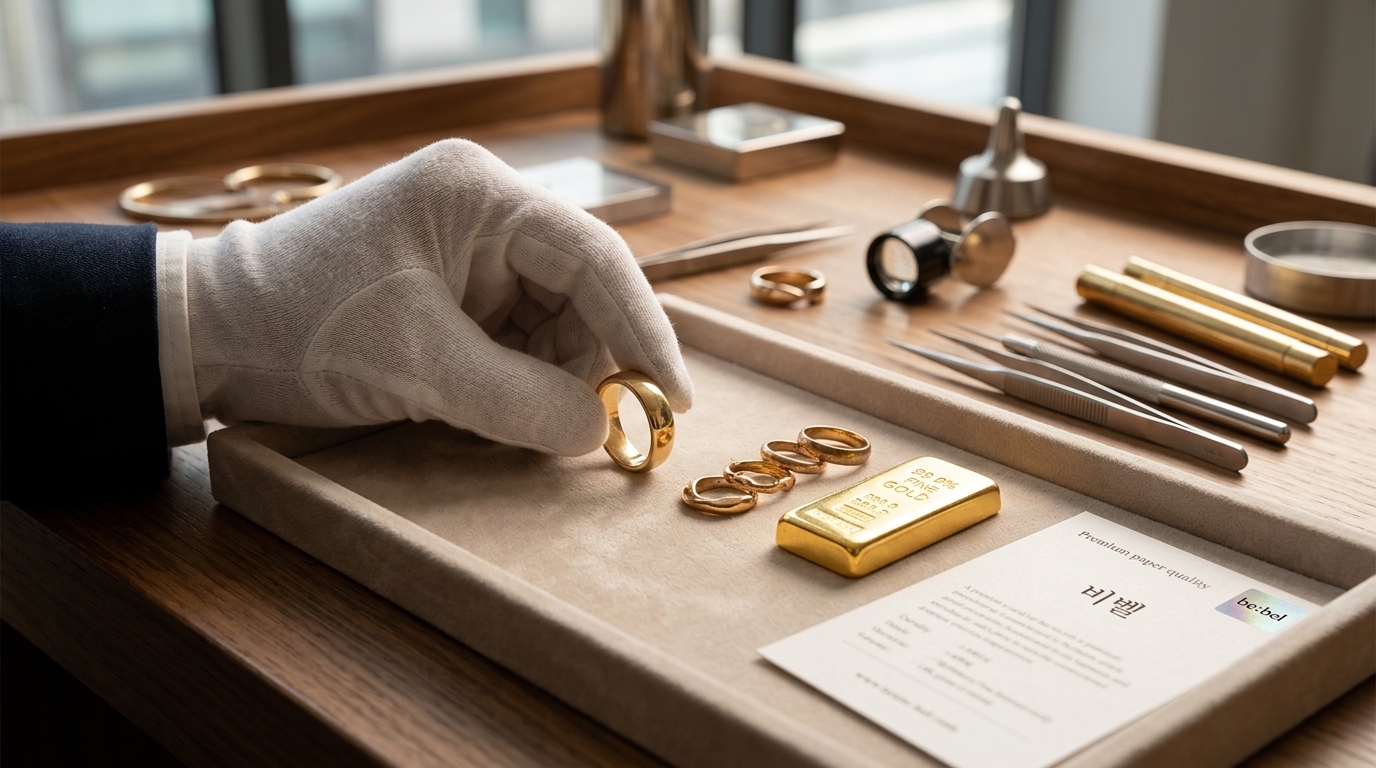
The Causes of Discoloration Differ Completely Between Pure Gold and 14K/18K Gold
To understand why gold discolors, you must first look at the gold content of the piece. 14K gold contains 58.5% pure gold, while 18K gold contains 75%. The remaining percentage is filled with alloy metals like silver, copper, zinc, and nickel to provide structural hardness and distinct color tones.
It is precisely these alloy components that react with oxygen and moisture in the air, or with the salt and acidic substances in the wearer's sweat, causing an oxidation reaction. When copper reacts, it creates reddish-brown or dark tarnish, and when silver comes into contact with sulfur compounds, it turns black through a silver sulfide reaction. In other words, discoloration in 14K or 18K jewelry is not a degradation of the gold itself, but the result of alloyed metals reacting with environmental chemicals.
Dark discoloration on 14K or 18K jewelry is not an issue with the gold itself, but a natural chemical reaction that occurs as the alloyed silver and copper oxidize.
In contrast, pure gold jewelry, which contains virtually no alloyed metals, does not oxidize in air. Any reddish tint or white discoloration on the surface of pure gold is not oxidation, but external adsorption—everyday chemical substances physically adhering to the surface.
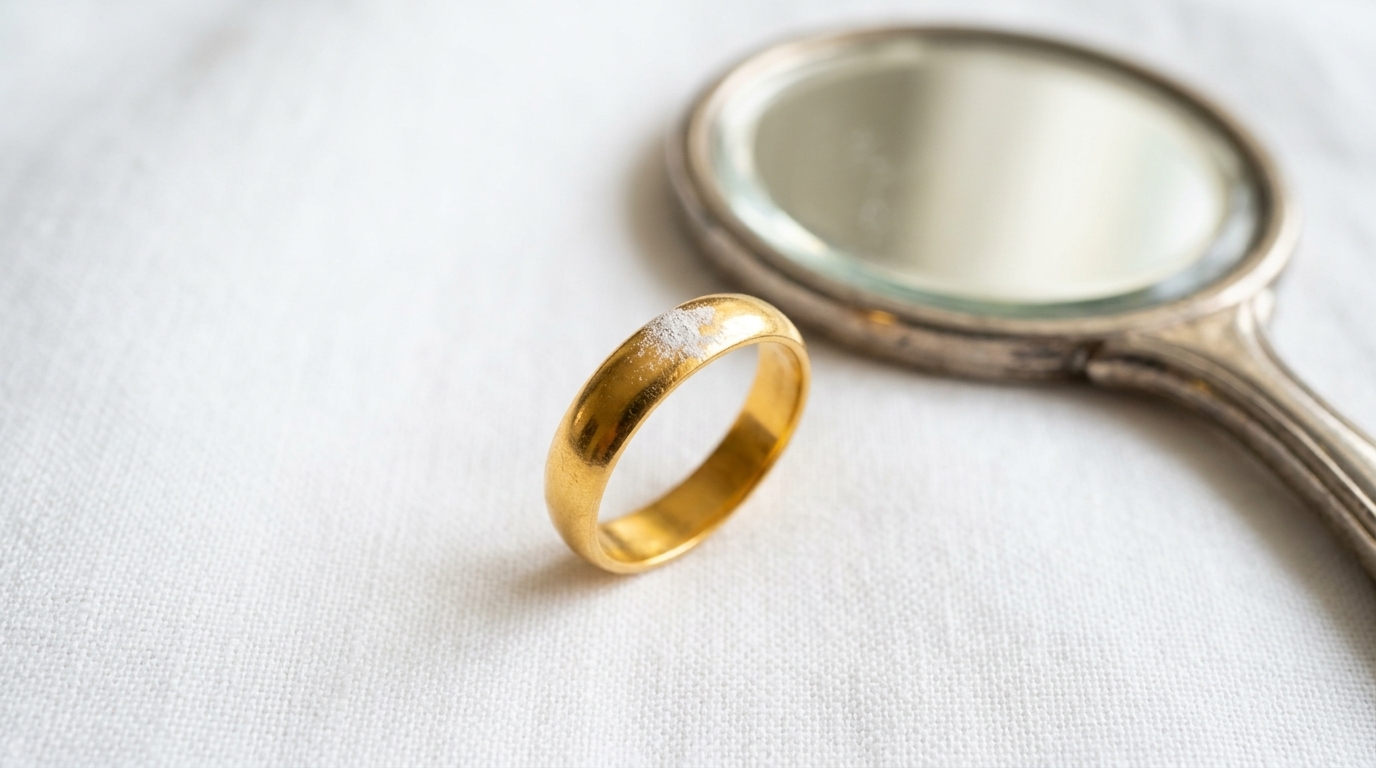
If Pure Gold Turns White: The First Substance to Suspect
If you wear a 24K pure gold ring and suddenly notice white or silvery patches on the surface, looking as if painted over, you should suspect contact with mercury. In the jewelry industry, this is known as the "amalgam phenomenon."
Mercury is the only metal that exists as a liquid at room temperature. The moment it touches gold, it rapidly penetrates the surface to form an amalgam—a gold-mercury alloy. Its signature characteristic is the disappearance of pure gold's deep yellow luster, leaving behind a dull, chalky white residue.
You might think you rarely encounter mercury in daily life, but it hides in many everyday items. Brightening cosmetics, certain medicated ointments, older thermometers or blood pressure monitors, herbal medicated patches, and even certain hot spring waters can contain trace amounts of mercury compounds. Merely touching a pure gold ring with cosmetic-coated hands or letting a bracelet brush against an area treated with ointment can cause white spots to spread in an instant.
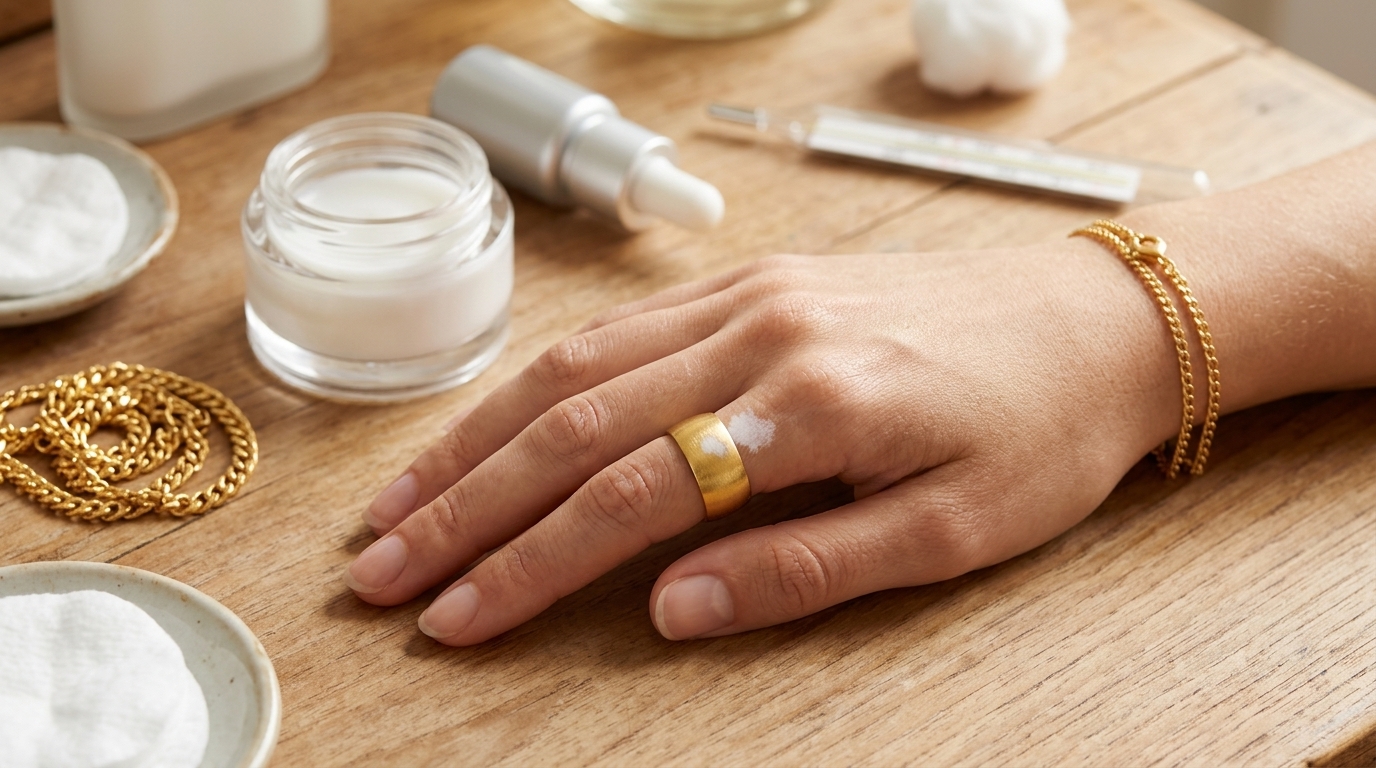
Everyday Reasons Behind Reddish Spots or Dark Stains
Another common occurrence is red specks appearing on pure gold jewelry, looking almost like flecks of red pepper powder. Since pure gold does not rust, why do these spots appear?
This happens when microscopic iron particles or dust from crafting tools touch the surface during production and later oxidize upon exposure to moisture. The minute trace of iron resting on the gold surface rusts, staining the gold surface red.
Another culprit is sulfur and chlorine. When you bathe in hot springs, use sulfur-based body washes, or expose jewelry to chlorinated swimming pool water for prolonged periods, a thin sulfur film can form, creating a dark, iridescent sheen on the surface. Additionally, perfumes, hair sprays, sweat, and body oils can accumulate in tiny crevices, dulling the shine and making the piece look dark and tired.
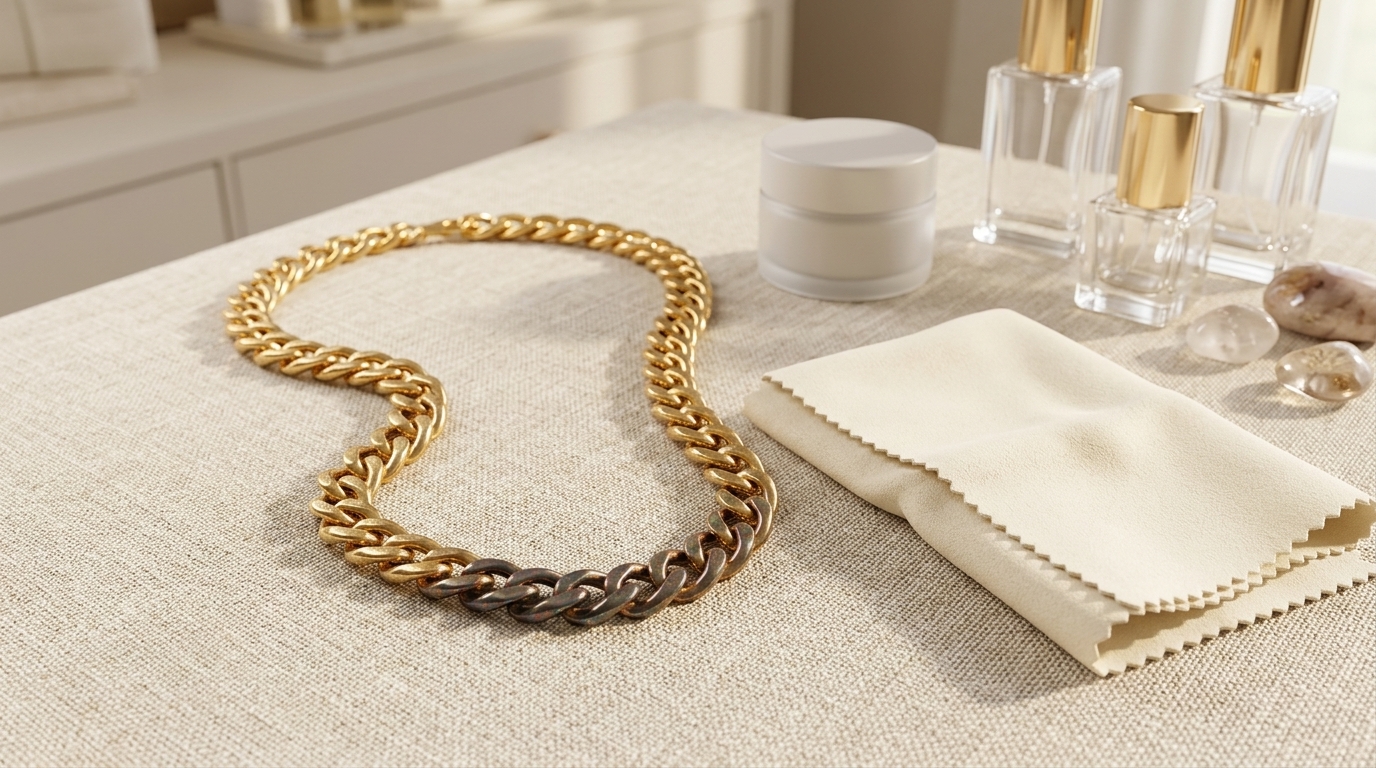
How to Safely Restore the Original Luster at Home
The method for dealing with discoloration depends entirely on its cause. Scrubbing aimlessly with toothpaste or an abrasive sponge without identifying the cause will only leave deep scratches on the delicate surface of pure gold.
For simple oil buildup or dust stains, add a few drops of mild neutral detergent to lukewarm water and soak the jewelry for about 10 minutes, then gently brush it with a soft baby toothbrush to clean it thoroughly. After rinsing with clean water, pat it gently with a soft microfiber lens cloth to dry completely.
Toothpaste contains strong abrasive agents that can wear down the soft surface of pure gold and cause fine scratches, so it should never be used.
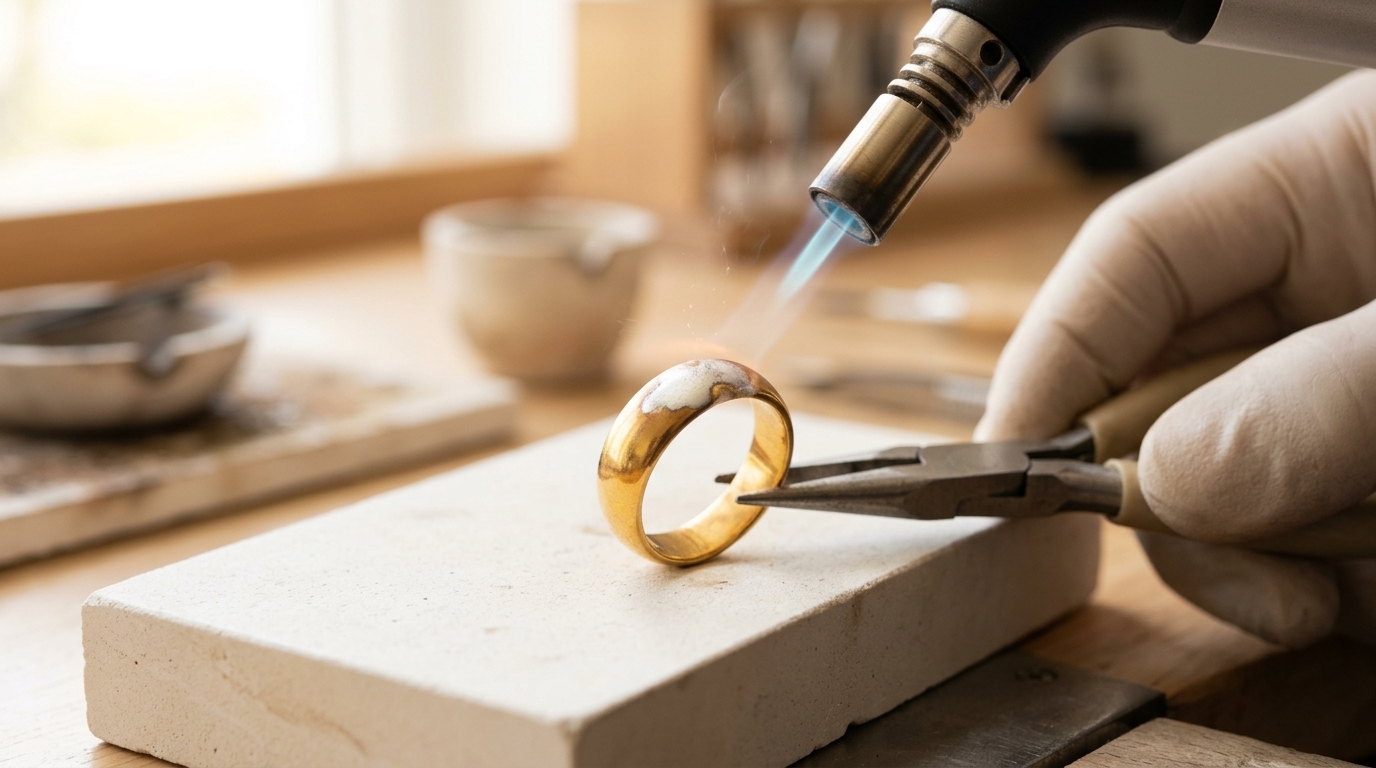
White discoloration caused by mercury amalgam cannot be removed by washing with water or wiping with a cloth. It requires applying heat to vaporize and burn off the mercury, taking advantage of its boiling point being significantly lower than that of gold.
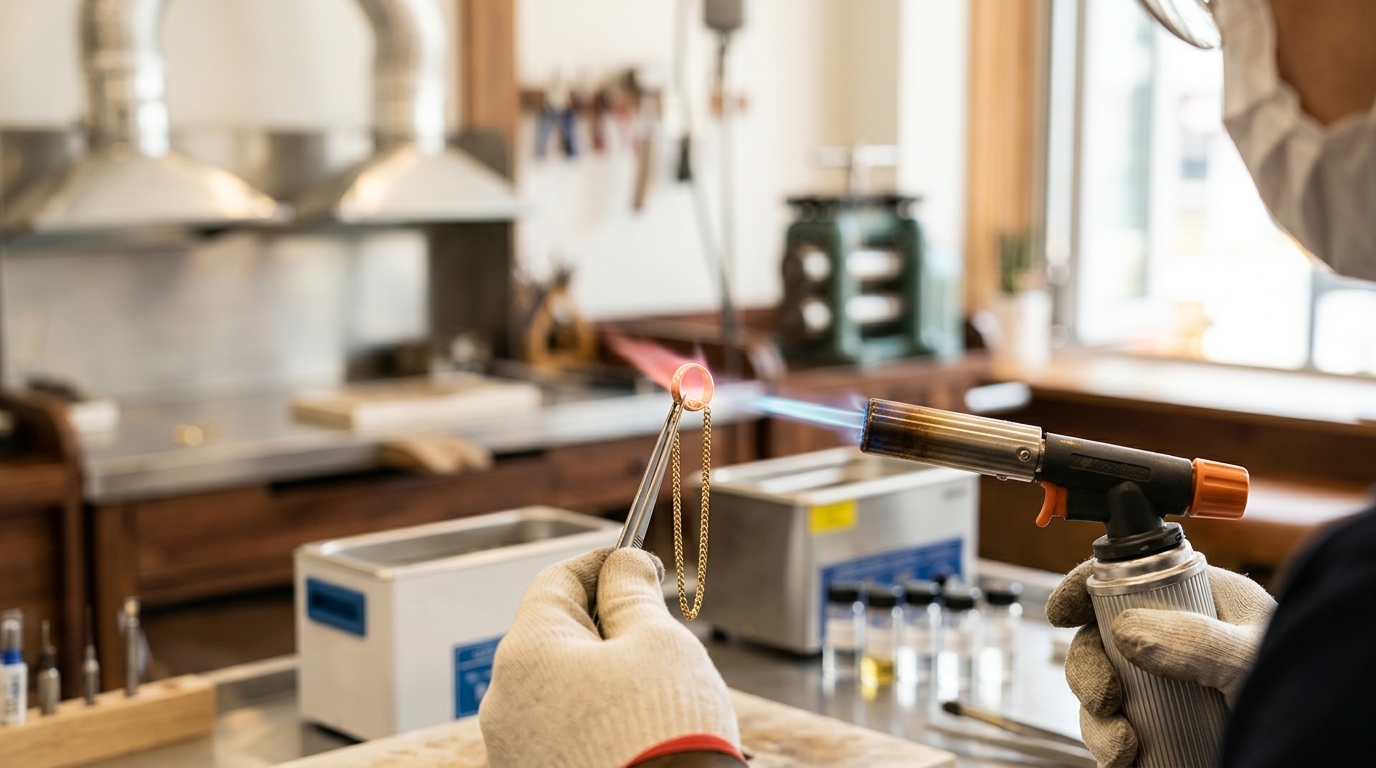
However, attempting this at home with a lighter carries the risk of soot stains or structural deformation. Because mercury vapor is harmful to human health, it is safest to entrust white-discolored jewelry to a professional jewelry atelier equipped with proper tools and ventilation for torch heat treatment and ultrasonic cleaning. Red spots can also be safely restored to their original clear yellow radiance through professional cleaning without any loss of pure gold.
Proper Daily Habits to Prevent Discoloration and Wear Jewelry Longer
Maintaining the original radiance of gold jewelry over time comes down to small daily habits. When getting ready, always apply makeup, perfume, and hair styling products first, allow them to fully absorb or settle, and put on your jewelry as the very last step.
Upon returning home, get into the habit of taking off your jewelry first before washing your hands. Always remove and safely store your pieces before exercising or entering saunas, hot springs, or swimming pools to protect their surfaces from sweat salts and chemicals.
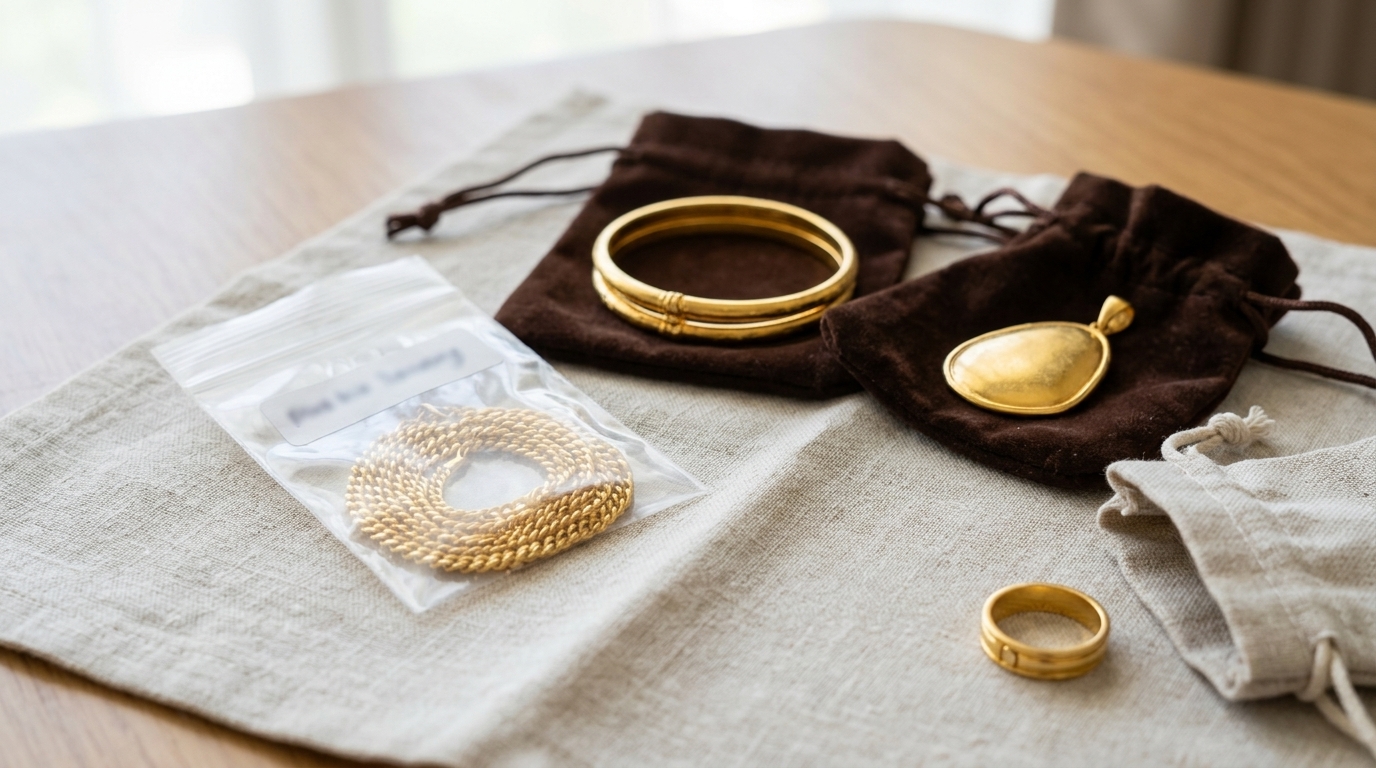
Care is also essential when storing your jewelry. Mixing pieces made of different metals or gemstones in a single box can cause surface scratches through friction or transfer metal dust that triggers discoloration. It is best to store each piece separately in a zip-lock pouch or soft cloth pouch to minimize contact with air.
Choosing Pure Gold Jewelry to Wear Every Day
Jewelry achieves its greatest value not when locked away deep in a wardrobe as a dormant asset, but when worn daily to brighten life's everyday moments. For 24K pure gold jewelry to resist discoloration and preserve its rich, substantial luster through daily wear, it must be supported by precise purity standards and robust craftsmanship.
Pure gold jewelry is crafted at 995 (99.5%) purity, where rings, earrings, and necklaces that touch your skin daily are refined in form and texture by master artisans. Understanding the soft properties of pure gold and executing well-engineered structural designs within precise weights ensures that even with long-term wear, crevices remain clean and the smooth luster endures.
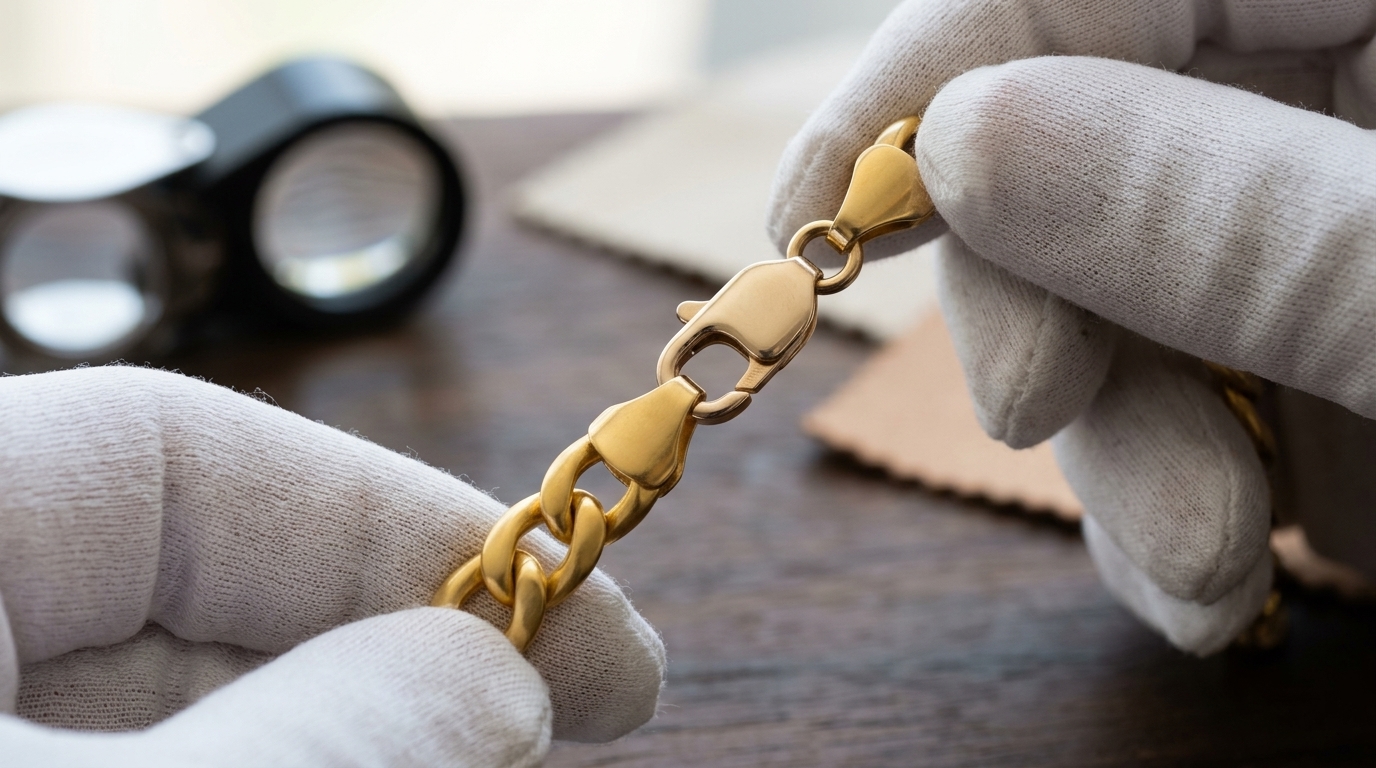
For pieces like necklaces and bracelets where durability at connection points is essential, clasps are crafted in 18K gold to prevent loosening. An honest commitment to calculating total weight so that the stated amount of pure gold is fully included is also a crucial factor determining the jewelry's integrity.
The timeless value of gold is perfected upon proper care and trustworthy quality. There is no need to panic if you notice discoloration—when cared for according to the exact cause, pure gold will always return to its original brilliant radiance. Discover the enduring value of pure gold that retains its deep luster through everyday wear at be:bel.
Pure Gold Mall be:bel · Editor B